If you have ever eaten less, moved more, and still watched the scale refuse to move, you are not failing. You are fighting biology, and biology usually wins. That is why so many people now search for an approach that works biologically for weight loss instead of against the body. Working biologically means understanding the hormones, metabolism, gut bacteria, and sleep cycles that decide whether your body stores fat or burns it. This guide explains those systems in plain English, separates what research supports from what it doesn’t, and gives you a simple 30-day starting plan. No hype, no magic promises — just the biology, told honestly.
Quick transparency: some links on this site are affiliate links that help fund our research at zero extra cost to you. We only point to products and tools we genuinely trust, and our explanations stay honest either way.
Why “Eat Less, Move More” Stops Working
The classic advice assumes your body is a simple calculator. It is not. It is a self-defending system. When you cut calories hard, your body responds as if food has become scarce: leptin, the fullness hormone made by fat cells, drops; ghrelin, the hunger hormone from your stomach, climbs; and your daily energy burn quietly shrinks. Researchers call this metabolic adaptation. You feel hungrier and burn less — at the same time.
That is not a willpower failure. That is biology doing exactly what it evolved to do, which is protecting stored energy. The smarter move is to work biologically for weight loss: create conditions where your body feels safe enough to release fat, instead of conditions that make it defend fat harder.
What “Biologically for Weight Loss” Actually Means
Here is the simple definition. Instead of attacking your body with extreme deficits, you align food, movement, sleep, and stress with the hormones and microbes that control fat storage. Think of it like adjusting a thermostat rather than smashing the wall. You are changing the settings that tell your body to store or release energy.
In practice, that means keeping blood sugar and insulin steadier, protecting muscle, feeding the gut bacteria linked to healthy appetite, sleeping enough, and moving throughout the day — not just during one workout. None of these moves is dramatic on its own. Together, they change the chemical environment your fat cells live in.
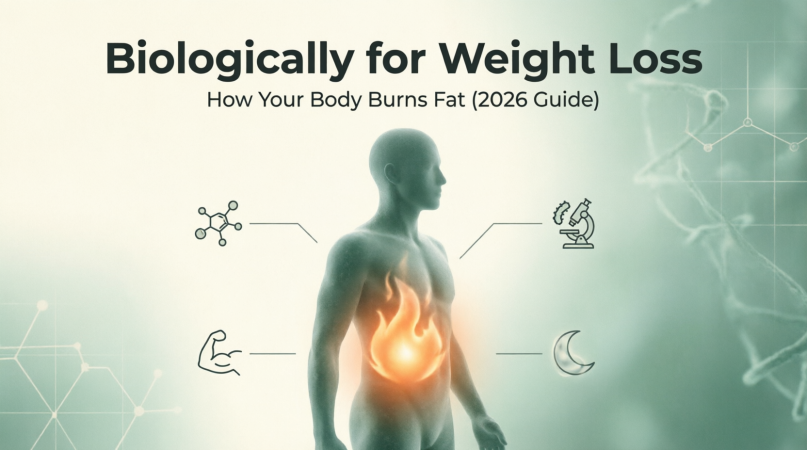
The 5 Biological Systems That Decide Whether You Burn Fat
Five systems do most of the work. Here is the quick map before we look at each one:
| System | Main job | One daily move |
|---|---|---|
| Hormones (insulin, leptin, ghrelin, cortisol) | Decide store vs. burn | Protein and fiber at meals, fewer liquid sugars |
| Metabolism and fat oxidation | Release and burn fat for fuel | Strength training plus daily walking |
| Gut microbiome | Influence appetite and calorie harvest | More fiber, some fermented foods |
| Sleep and circadian rhythm | Set hunger hormones and cravings | 7–9 hours, consistent wake time |
| Muscle mass and NEAT | Drive your daily calorie burn | 2–3 strength sessions, more everyday steps |
1. Hormones: The Storage Switches
Insulin is the storage hormone. It rises after you eat, especially after refined carbs and sugary drinks, and while insulin is high, fat release is largely paused. Every hour your insulin stays calm is an hour your body can sit in burn mode. Leptin and ghrelin handle fullness and hunger, and crash dieting flips both in the wrong direction. Cortisol, the stress hormone, may push the body toward holding belly fat and chasing quick-energy foods when it stays high for weeks. You cannot control hormones directly, but everything in the checklist later in this guide nudges them in a helpful direction.
2. Metabolism and Fat Oxidation: The Burn Engine
Fat loss happens in two steps. First, lipolysis: fat cells release stored fatty acids into the blood when energy is needed and insulin is low. Second, oxidation: your muscles and organs burn those fatty acids as fuel. Both steps must run, or the scale stays put.
Here is the part most people miss: your resting metabolism (breathing, brain, organs) is the biggest slice of daily burn, then everyday movement, and only then the gym. That is why protecting your resting burn matters so much — and why muscle, protein, and daily steps show up in every plan that works biologically for weight loss.
3. The Gut Microbiome: The Hidden Partner
Your gut holds trillions of bacteria, and early research links a diverse microbiome to healthier body weight. Some microbial patterns appear to extract more calories from the same meal, while others produce short-chain fatty acids that may support appetite regulation. Fiber-rich plants and fermented foods feed the bacteria associated with the healthier side of that picture. This is young science, so treat gut health as a supporting player — helpful, not a standalone fix. If post-meal heaviness is also an issue, our guide on How to Manage Bloating Naturally pairs well with this section.
4. Sleep and Circadian Rhythm: The Overlooked Lever
Short sleep raises ghrelin, lowers leptin, and makes high-calorie foods more tempting the next day — a measured, repeatable effect in sleep studies. Your body also runs on a clock: eating late at night, when digestion and insulin sensitivity are naturally lower, is linked to harder fat loss in shift-work research. Treat sleep as a fat-loss tool, not a luxury. Seven to nine hours with a consistent wake time is one of the cheapest biological wins available.
5. Muscle and NEAT: The Quiet Calorie Burners
Muscle is metabolically active tissue, and keeping it while losing fat is what prevents your daily burn from shrinking. Strength training two to three times a week sends the “keep the muscle” signal. Then there is NEAT — non-exercise activity like walking, stairs, housework, and fidgeting. Across a week, NEAT often burns more than your workouts do. It is the most underrated dial in the entire biological picture.
What Actually Works Biologically for Weight Loss: The Daily Checklist
Here is the practical list, in order of impact:
- Protein at every meal. It fills you up, costs more energy to digest, and protects muscle.
- Fiber first. Vegetables, legumes, and whole plants feed gut bacteria and slow hunger.
- Cut liquid sugar. Sugary drinks create the sharpest insulin swings of anything you consume.
- Strength train 2–3 times a week. Muscle keeps your resting burn from adapting downward.
- Walk more, all day. Steps are the easiest NEAT win most people leave on the table.
- Sleep 7–9 hours with a fixed wake time. Hunger hormones rebalance overnight.
- Finish eating about 3 hours before bed. Late calories land when your body clock wants to rest.
- Keep the deficit modest. Roughly 300–500 calories below maintenance; extreme cuts trigger adaptation.
- Manage stress on purpose. Walks, sunlight, breathing work — anything that lowers chronic cortisol.
If you want extra support on top of these basics, our roundup of the Best Supplements for Weight Loss covers what has real research behind it and what doesn’t.
Biological Myths vs. Facts
| Myth | What biology actually says |
|---|---|
| “My metabolism is broken.” | It adapts; it is rarely broken. Extreme dieting slows it, while muscle and protein protect it. |
| “Fat-burning pills melt fat.” | No supplement replaces the release-and-burn cycle. At best, some ingredients may modestly support it. |
| “Cardio is the only way.” | NEAT and muscle usually burn more across a week than workouts do. |
| “Carbs at night turn straight to fat.” | Total intake and sleep quality matter more than clock time, though late eating often means extra calories. |
| “A plateau means failure.” | Plateaus are often water shifts and adaptation. The trend over weeks tells the truth. |
A Simple 30-Day Biological Reset (One Change Per Week)
Changing everything at once makes it impossible to learn what your body responds to. Add one layer per week:
| Week | Focus | Actions |
|---|---|---|
| 1 | Sleep and protein | Fixed bedtime and wake time; protein at breakfast |
| 2 | Movement | Two strength sessions; add 2,000 steps to your usual day |
| 3 | Gut | One extra vegetable serving daily; add yogurt, kefir, or kimchi |
| 4 | Timing and stress | Finish dinner 3 hours before bed; 10-minute daily wind-down |
By day 30 you have a routine, not a diet — and routines are what biology rewards.
How Long Before You See Results?
Expect a pattern, not a straight line. Weeks 1–2: bloating eases and energy steadies as sleep and blood sugar settle. Weeks 3–6: appetite and cravings usually calm down, and clothes may fit differently before the scale moves. Weeks 7–12: a visible downward trend appears if you stayed consistent. Biology moves in weeks, not days, which is exactly why slow, steady changes beat crash diets every single time.
When Biology Needs a Doctor
If you have been consistent for 8–12 weeks and nothing moves, stop guessing. A doctor can check thyroid function, review medications that promote weight gain, and screen for insulin resistance, PCOS, or sleep apnea. Lab work turns guesswork into a plan, and some of these conditions make the biological approach harder until they are treated.
Before the FAQs, one honest note: we’re health writers, not your doctor. Nothing here replaces personal medical advice, and weight that won’t budge can sometimes trace back to thyroid issues, medications, or conditions like PCOS. If you’re doing everything right and still stuck, please bring it up with your healthcare provider — that conversation is part of the plan, not a last resort.
Frequently Asked Questions
Q: How does the body burn fat biologically?
A: Fat burning happens in two steps. First, lipolysis: fat cells release stored fat into the blood when insulin is low and energy is needed. Second, beta-oxidation: your muscles and organs burn that released fat as fuel. This is why stable blood sugar, daily movement, and a modest calorie gap matter — they keep the release-and-burn cycle running instead of paused. No pill or powder replaces this cycle.
Q: Which hormones matter most biologically for weight loss?
A: Four do most of the work. Insulin decides whether your body stores or releases fat. Leptin, made by fat cells, tells your brain you’re full. Ghrelin, from the stomach, raises hunger. Cortisol, the stress hormone, can push the body toward holding onto belly fat when it stays high. You can’t control hormones directly, but sleep, protein, fiber, strength training, and stress management all nudge them in a helpful direction.
Q: Can I speed up my metabolism biologically for weight loss?
A: Partly, yes. Your resting metabolism is fairly stable, but it adapts down when you diet hard, which is why crash diets backfire. The levers that help are muscle (strength training two to three times a week), protein (it costs more energy to digest), daily walking, and enough sleep. Think of it as protecting your metabolism from slowing, rather than chasing a magic speed-up.
Q: Does gut health really affect weight?
A: Early research suggests it might. People with obesity often show less diverse gut bacteria than leaner people, and certain microbes extract more calories from the same food. Fiber-rich plants and fermented foods feed the bacteria linked to healthier weight and appetite control. It’s a young science, so treat gut health as a supporting player — helpful, not a standalone fix. More human trials are still needed.
Q: Why am I not losing weight even eating less?
A: Usually because your body adapted. When calories drop, the brain defends its fat stores: leptin falls, ghrelin rises, and your daily burn quietly shrinks through a process called metabolic adaptation. Hidden calories, poor sleep, stress, and low muscle mass also blunt results. If the scale is stuck for over a month despite honest tracking, a doctor can check thyroid function, medications, and insulin resistance.
Q: How long does a biological approach take to work?
A: Expect a pattern, not a straight line. The first two weeks usually bring less bloating and steadier energy. Weeks three to six often calm appetite and cravings as sleep and blood sugar settle. Visible scale changes typically show up between weeks seven and twelve if you stay consistent. Biology moves in weeks, not days — which is exactly why slow, steady changes beat crash diets.
The Bottom Line: Work With Your Body, Not Against It
Working biologically for weight loss is not a trick or a trend. It is simply respect for how your body actually decides to store or release energy. Keep insulin steadier, protect muscle, feed your gut, sleep like it matters, and move all day — and the scale starts to follow because the chemistry underneath it changed. If cravings are your biggest blocker, our guide on How to Manage Sugar Cravings Naturally is the natural next read. Start with one change this week. Biology rewards consistency, not perfection.
The research discussed on this page is shared for education, not as medical advice, and no claim here has been evaluated by the FDA to diagnose, treat, or cure any disease. Your body, your doctor, and your lab work always get the final say.