Your brain holds about two percent of body weight yet consumes roughly twenty percent of your daily energy and micronutrients. Searches for vitamins and minerals for brain function keep rising, and for good reason. Neurons depend on B vitamins, magnesium, iron, zinc, and steady electrolytes to send every signal. This guide explains which micronutrients matter most, which foods supply them, and who faces real deficiency risk. A varied diet covers most needs; testing and targeted supplementation cover the gaps.
Key Takeaways
- B12, folate, B6, D, magnesium, iron, and zinc carry the cognitive load.
- Sodium, potassium, and water generate every nerve impulse.
- Deficiency correction helps; excess supplementation rarely adds benefit.
- Test before supplementing iron or chasing fog with capsules.
- Food patterns outperform any capsule over the long run.
Feed the neuron first, then patch the proven gap.
Why Your Brain Depends on Micronutrients
Neurotransmitters such as serotonin, dopamine, and GABA are built with B6, B12, and folate as cofactors. Myelin, the insulation around nerve fibers, needs B12 for maintenance. Iron carries the oxygen neurons burn, magnesium calms excitatory signaling, and zinc sits inside memory-related synapses. Sodium and potassium gradients generate the electrical impulse itself. Every thought you have runs on chemistry, and that chemistry runs on micronutrients.
Some readers prefer one formula that groups these nutrients together; our Memo Matrix review checks its printed doses against daily reference values.
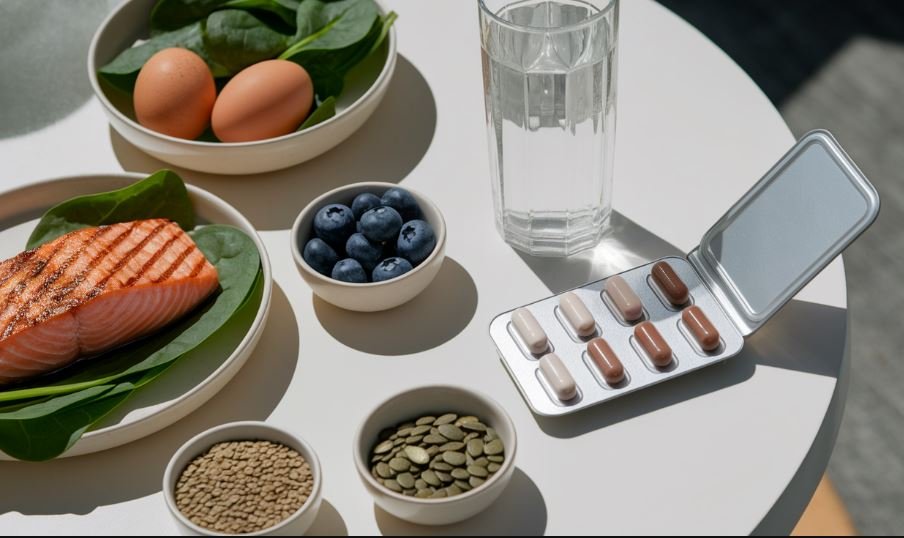
Key Vitamins and Minerals for Brain Function
Seven nutrient groups carry most of the cognitive load. Here is what each one does and where to find it.
B12 and Folate (B9)
These two build and repair nerve tissue and keep homocysteine, an amino acid linked to vascular risk, in check. The NIH Office of Dietary Supplements notes that B12 deficiency causes fatigue, memory complaints, and neurological symptoms. Risk rises after 50, with vegan diets, and with long-term metformin or acid-reducing drugs. Sources include fish, meat, eggs, dairy, and fortified grains.
Vitamin B6
B6 converts amino acids into neurotransmitters, including serotonin and GABA. Mild deficiency shows up as irritability and poor concentration. Poultry, fish, potatoes, and bananas supply it well. Megadoses from supplements can damage nerves over time, so stay near daily values.
Vitamin D
Receptors for vitamin D sit throughout the brain, and observational studies link low levels with faster cognitive decline. Causation remains unproven, yet testing is cheap and correction is simple. Sunlight, fatty fish, and fortified dairy help; many adults still fall short in winter months.
Magnesium
Magnesium regulates NMDA receptors, the synapses behind learning and memory. It also supports sleep and stress recovery, two indirect pillars of clear thinking. Leafy greens, nuts, seeds, and legumes supply it, but national surveys suggest many adults miss the recommended intake.
Iron
Iron delivers oxygen to working neurons and supports dopamine synthesis. Deficiency causes fatigue, fog, and short attention spans, especially in menstruating women and endurance athletes. Red meat, lentils, and fortified cereals supply it well. Never supplement iron without a blood test, because excess iron damages organs.
Zinc
Zinc concentrates in the hippocampus and modulates synaptic signaling. Oysters, beef, pumpkin seeds, and beans supply it well. True deficiency is uncommon, yet vegetarian diets and digestive disorders can lower status over time.
Electrolytes: Sodium, Potassium, and Water
Every nerve impulse is a wave of sodium and potassium crossing cell membranes. Even mild dehydration reduces attention, working memory, and mood (Adan, Journal of the American College of Nutrition, 2012, PubMed). Water plus ordinary meals covers most days; long heat exposure or heavy sweating raises needs. Electrolyte blends marketed for focus, such as NeuroSalt, pair sodium and potassium with botanicals, and our review checks whether its amounts match hydration research.
Food First: Where to Get Each Nutrient
A simple weekly pattern covers nearly every nutrient above. Eat fatty fish twice, leafy greens daily, eggs several times weekly, and legumes in place of meat a few days. Add nuts or seeds as a snack, and fortified plant milk if you avoid dairy. A sample day: oatmeal with berries and pumpkin seeds, a salmon and spinach lunch, lentil soup with whole-grain bread, then yogurt or a fortified soy dessert. Food also delivers fiber and polyphenols that no capsule contains. No supplement outruns a poor diet; it only patches one.
Who Is at Risk of a Brain-Relevant Deficiency?
- Adults over 50: stomach acid declines, reducing B12 absorption.
- Vegans and vegetarians: B12, iron, and zinc need planning or supplementation.
- Menstruating women: iron loss exceeds intake in many diets.
- People with indoor lives or darker skin: vitamin D synthesis runs low.
- Metformin or PPI users: both reduce B12 and magnesium status over time.
- Heavy sweaters and endurance athletes: sodium and potassium losses climb.
- Regular alcohol use: B vitamins deplete faster than they replenish.
Do Micronutrient Supplements Improve Cognition?
The evidence splits cleanly. In deficient people, correction restores function quickly and measurably. In replete people, extra B vitamins show little cognitive benefit in trials. One large trial in older adults found a small but measurable advantage for a daily multivitamin-mineral over placebo on memory tests (Baker et al., Alzheimer’s & Dementia, 2022, PubMed, COSMOS-Mind). My verdict: test first, then supplement the gap your labs reveal, not the gap marketing invents.
How to Choose a Micronutrient Supplement Safely
- Read the %DV per serving; avoid repeated megadoses of B6, zinc, or vitamin A.
- Prefer third-party tested products (USP or NSF marks) when available.
- Check iron content: unnecessary iron is the most common supplement safety mistake I see.
- Take fat-soluble vitamins with food for proper absorption.
- Screen interactions with a pharmacist if you take warfarin, thyroid, or antibiotic therapy.
- Compare refund windows; longer terms lower buyer risk.
Broad formulas like Optimal Brain combine vitamins with botanicals, and our review lists each printed amount so you can compare it against your own lab results.
People Also Ask
1. Which vitamin deficiency causes brain fog and memory problems?
B12 deficiency is the classic cause, producing fog, memory complaints, and sometimes balance changes. Vitamin D deficiency and iron deficiency also cause fatigue with poor concentration. A simple blood panel for B12, ferritin, and vitamin D identifies most cases, and treatment reverses symptoms gradually.
2. Should I take a B12 supplement if I eat meat?
Usually not, since animal foods supply absorbable B12. Exceptions include adults over 50, metformin or PPI users, and anyone with pernicious anemia or gut surgery. If your blood level sits low-normal, a clinician may still recommend supplementation.
3. Can electrolytes really improve focus during long workdays?
Only when dehydration or sweat losses are part of the problem. Plain water plus regular meals covers most office days. During heat, exercise, or illness, sodium and potassium replacement restores attention faster than water alone.
4. Is it safe to take a brain vitamin every day?
For most healthy adults, a formula near daily values is well tolerated. Risks concentrate in megadoses, unnecessary iron, and interactions with prescriptions. Bring the label to your pharmacist, and recheck blood levels after three months of use.
Sources and Review Information
- NIH Office of Dietary Supplements: Vitamin B12 and Vitamin D Fact Sheets for Health Professionals
- PubMed: Adan, Journal of the American College of Nutrition 2012, dehydration and cognitive performance
- PubMed: Baker et al., Alzheimer’s & Dementia 2022 (COSMOS-Mind multivitamin-mineral trial)
Disclaimer
This article is educational information only, not medical advice, diagnosis, or treatment. Statements about supplements have not been evaluated by the Food and Drug Administration. Internal links point to our own independent product reviews on this website.